11th of January

2017 United States Solar Power Rankings


2017 United States Solar Power Rankings

Hey folks! 2016 was a hell of a year, huh? Nowhere was that statement more true than in the solar industry. We’ve been through the ringer this year, with some big victories and big defeats.

We began the year with an extension to the all-important Federal Solar Investment Tax Credit, which served to put a lot of long-term fears to rest across the industry. That was good start, but it didn’t last long.

Almost at the same time, Nevada did away with its formerly-excellent net metering policies, setting the tone for a year full of contentious fights over how utility companies should pay homeowners for the solar energy they produce.

There’s a whole lot more to talk about, but for now, let’s jump right into the rankings.

This year, we analyzed 663 data points to judge the promise of solar in all of the 50 states and the District of Columbia.

As in past years, we graded each state based on 12 criteria, then weighted the criteria individually, and multiplied the values of the grades by the weights to determine rankings. Read more…

2017 United States Solar Power Rankings

10th of January

Solar rooftop 50% cheaper than diesel generator sets


Solar rooftop 50% cheaper than diesel generator sets

Recommending the housing societies to replace the diesel generator sets with the rooftop solar power systems, a study by Centre for Science and Environment (CSE) finds the clean energy option financially more attractive.

The study said the cost of power generation from a diesel generator set, including the capital cost, is Rs 27 to Rs 33 per unit as compared to rooftop solar tariff of less than Rs 10 per unit.

“In all the residential societies that CSE studied, the cost of power from solar rooftop with battery backup was found to be about half the cost of power generated by diesel generator sets,” said Chandra Bhushan, Deputy Director General at CSE.

According to the study, up to 3 giga-watt of solar rooftop can be installed in new residential societies over the next five-seven years.

The study points out the diesel generator sets have become more redundant due to reducing power outrage in cities. Read more…

Solar rooftop 50% cheaper than diesel generator sets

10th of January

Solar rooftop 50% cheaper than diesel generator sets


Solar rooftop 50% cheaper than diesel generator sets

Recommending the housing societies to replace the diesel generator sets with the rooftop solar power systems, a study by Centre for Science and Environment (CSE) finds the clean energy option financially more attractive.

The study said the cost of power generation from a diesel generator set, including the capital cost, is Rs 27 to Rs 33 per unit as compared to rooftop solar tariff of less than Rs 10 per unit.

“In all the residential societies that CSE studied, the cost of power from solar rooftop with battery backup was found to be about half the cost of power generated by diesel generator sets,” said Chandra Bhushan, Deputy Director General at CSE.

According to the study, up to 3 giga-watt of solar rooftop can be installed in new residential societies over the next five-seven years. Read more…

Solar rooftop 50% cheaper than diesel generator sets

29th of December

The Biggest Clean Energy Advances in 2016


The Biggest Clean Energy Advances in 2016

lean energy made critical strides in 2016. The Paris Climate accords went into effect, the price of solar installations continued to drop, investments in renewable energy soared, offshore wind finally got under way in the United States, and scientists made a series of technical advances that promise to make sustainable energy increasingly efficient and affordable.

That last one is key, since invention is still the surest way to avoid the greatest impacts of climate change.  Today’s commercially available renewable technologies can’t meet all of the world’s energy demands, even if they’re scaled up aggressively. The United States comes up about 20 percent short by 2050, according to a thorough analysis by the National Renewable Energy Laboratory. Meanwhile, the U.N.’s Intergovernmental Panel on Climate Change concluded the world must cut greenhouse gas emissions by as much as 70 percent by midcentury, and to nearly zero by 2100, to have any chance of avoiding warming levels that could ensure sinking cities, mass extinctions, and widespread droughts. Read more…

The Biggest Clean Energy Advances in 2016

29th of December

Accepting the Reality of Climate Change Is Good for Business


Accepting the Reality of Climate Change Is Good for Business

The climate cause has lost an ally in the White House, but the private sector has ensured that the clean technology revolution is here to stay

Yes, climate change is an existential threat—one that keeps me up at night. But talking of fire and brimstone only inflames those who either (rightly) feel helpless in the face of this reality or those who have a vested interest in big oil or coal. So rather than preaching to the converted, what if we look to the billionaire luminaries who have taken up the climate cause as smart business?

All business ventures start with a challenge. World energy consumption is on the rise, as are global temperatures. Meanwhile, our planet only has so much oil and natural gas left for extraction, which will ultimately re-center the future economy on alternative fuels. To power the population’s energy needs, we must focus our attention — and capital—on affordable clean energy solutions, which have the added benefit of ensuring the future health of our planet.

Last year, Bill Gates announced the Breakthrough Energy Coalition, an international partnership driven by 30 entrepreneurs, including Amazon founder Jeff Bezos and Alibaba chief Jack Ma, committed to investing in an emission-free future. Yesterday, the Coalition announced the launch of the Breakthrough Energy Ventures (BEV). The venture fund will invest over $1 billion on the next generation of clean energy innovations that provide the world with “reliable and affordable energy, foods, goods, and services without emitting greenhouse gases.” Read more…

Accepting the Reality of Climate Change Is Good for Business

23rd of December

10 Predictions for Rooftop Solar in 2017


10 Predictions for Rooftop Solar in 2017

I got lucky with my predictions for rooftop solar in 2016 — pretty much on target with nine out of the 10 darts that I threw. But this year is shaping up to be much more challenging, with routine solar-coaster turmoil combined with political uncertainty. Looking forward to 2017, my list no longer includes the benefits of the Clean Power Plan and 500 million solar panels (along with the EPA and half the equity in the remaining solar module companies). Nevertheless, I remain very optimistic about the future of clean technology industries simply because their economic benefits have been proven. So here are my 10 predictions for rooftop solar in 2017.

1. Module prices will stay at current low levels, roughly 35 cents for megawatt orders, roughly 45 cents for container quantities and roughly 55 cents for small orders. Manufacturers prefer to operate their production lines at full capacity (and full employment), even if they are selling at breakeven or less. As the year progresses, these low prices will apply to higher and higher efficiency modules. Differentiated modules — those with integrated electronics, simplified installation technology or 20+ percent efficiency — will command higher price points and margins simply because they provide more value to installers and homeowners.

2. U.S. solar manufacturing will continue to decline. Sadly, the module supply chain is almost entirely from Asia: wafers, cells, backsheets, EVA, junction boxes, glass and aluminum frames are all cheaper in China with comparable quality. Political rhetoric will not bring manufacturing back without a good plan to address the supply of key components in the U.S. Ironically, tariffs have made things much worse for U.S. manufacturers — removing tariffs on cells and extruded aluminum for solar would go a long way toward improving the economics for the remaining U.S. module manufacturers.

3. Community solar will struggle to get traction. Customers want both clean and cheap solar power. But when community solar is developed by utilities, they charge a premium for solar, so customers don’t buy. When lower per kilowatt-hour cost community solar projects are developed independently, utilities act to delay projects or increase costs in order to protect their monopoly. More local governments will step in with community-choice Aggregation programs. These CCA programs break the utility electricity sales monopoly, providing clean and cheap power to customers. Read more…

10 Predictions for Rooftop Solar in 2017
12th of December

Kendriya Vidyalayas to go green with rooftop solar power systems


Kendriya Vidyalayas to go green with rooftop solar power systems

The Kendriya Vidyalaya Sangathan (KVS) is going to generate electricity through the rooftop solar photovoltaic system. A pilot project will be launched at viable Kendriya Vidyalayas across NCR with more than 40 KWp capacity, and in such schools in the northeastern states.

According to a press statement from the Sangathan, a detailed survey of KVs located in NCR has already been conducted for installation of rooftop solar PV power system. Based on the survey report, approximately 1.18 MWp grid connected rooftop solar PV system can be installed in 24 KVs.

The Centre has set a target of 1,00,000 MW of solar power generation by 2022, of which 40,000 MW is proposed from grid connected rooftop solar PV plants. The ministry of new and renewable energy is implementing a programme called “Grid Connected Rooftop and Small Solar Power Plants Programme”. Read more…

Kendriya Vidyalayas to go green with rooftop solar power systems

9th of December

SECI floats tender for grid-linked 1GW rooftop solar


SECI floats tender for grid-linked 1GW rooftop solar

As part of efforts to achieve the Centre’s target of 40 GW rooftop solar by 2022, Solar Energy Corp (SECI) has floated a tender of 1000 MW power for development of grid-connected rooftop solar capacity by utilising buildings of central ministries/departments.

“This would be the largest rooftop tender to be launched by SECI and is expected to give a big boost to the hugely potent rooftop solar power generation segment,” the New & Renewable Energy Ministry said in a statement today.

According to the statement, the 1000 MW tender, one of the largest globally, is a move to rapidly escalate rooftop solar capacity in the country, and comes in quick succession to SECI’s earlier tender of 500 MW capacity, targeting buildings in the residential/institutional and social sectors.

SECI is the leading PSU in the rooftop solar segment and has already commissioned over 54 MW capacity of rooftop solar projects under multiple government schemes.

The upcoming 1000 MW tender is especially targeted at utilising the numerous buildings of the central government ministries/departments.

The highlight of this tender is its innovative ‘Achievement-Linked Incentives Scheme’ wherein the incentives in terms of capital subsidy shall be provided on the basis of performance achieved by designated ministries/departments against their committed targets in the given timespan. Read more…

SECI floats tender for grid-linked 1GW rooftop solar

5th of December

Sweden on target to run entirely on renewable energy by 2040


Sweden on target to run entirely on renewable energy by 2040

Sweden is on target to run entirely on renewable energy within the next 25 years, a regulatory official has said.

Last year, 57 per cent of Sweden’s power came from renewables such as hydropower and wind sources, with the remainder coming from nuclear power.

The country now plans to tap into its “large potential” for onshore wind power, in order to make the country completely fossil-free by 2040 – a goal set by Sweden’s prime minister at the UN General Assembley last year.

“We are not densely populated, we have a lot of good places to put land-based large-scale wind and there is large potential for that in Sweden,” Anne Vadasz Nilsson, Director General of the Swedish Energy Markets Inspectorate told Reuters on Monday. Read more…

Sweden on target to run entirely on renewable energy by 2040

3rd of December

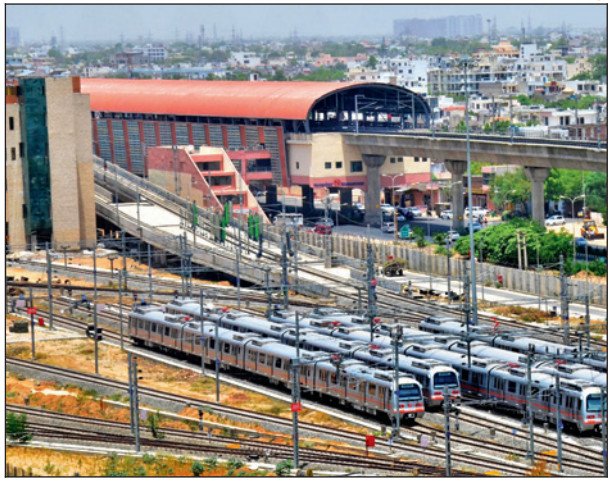
Rooftop solar plant to make 8 Metro stns self-sufficient


Rooftop solar plant to make 8 Metro stns self-sufficient

metro_stsns

GOING GREEN: This will be the biggest solar plant which will be installed on any of the government buildings

JAIPUR: Going green in its second year of operations, Jaipur Metro has decided to set up rooftop solar panels at eight elevated stations on its 9.25-km-long corridor between Mansarovar and Chandpole.

The power generated by 2,500-kwp ‘Rooftop Solar Power Plant’ will be used to meet all the requirements at the stations in day time and would reduce its dependence on non-renewable sources. This will be the biggest solar plant, which will be installed on any of the government building.

“For all Metro operations, approximately 11 lakh units are required . The plant will produce 2.5 lakh units which will meet all the requirement of the stations in day time,” said JMRC director (operations) C S Jeengar.

Earlier, the JMRC has proposed to install 1,000-kwp ‘Rooftop Solar Power Plant’. However, proposal was recently forwarded by JMRC to the Centre to install the solar plant of higher capacity. Read more

Rooftop solar plant to make 8 Metro stns self-sufficient