Install a money making machine on your roof

The world’s growing fleet of solar panels generated a third more electricity in 2015 than a year earlier, making power captured from the sun the world’s fastest growing source of energy, according to BP Plc.
Solar generation grew 33 percent, with China overtaking the U.S. and Germany as world leader in 2015, BP said in its 65th annual statistical review into world energy published on Wednesday. The London-based oil company exited from solar in 2011 after 40 yearsin the business.
“Sharp cost reductions have gone hand-in-hand with rapid growth in renewable energy. Solar power production has increased more than 60-fold in 10 years, doubling capacity every 20 months,” said Spencer Dale, BP chief economist, in a speech that also predicted continued falls in the costs of solar. Get a quote for a Solar rooftop system Read More…
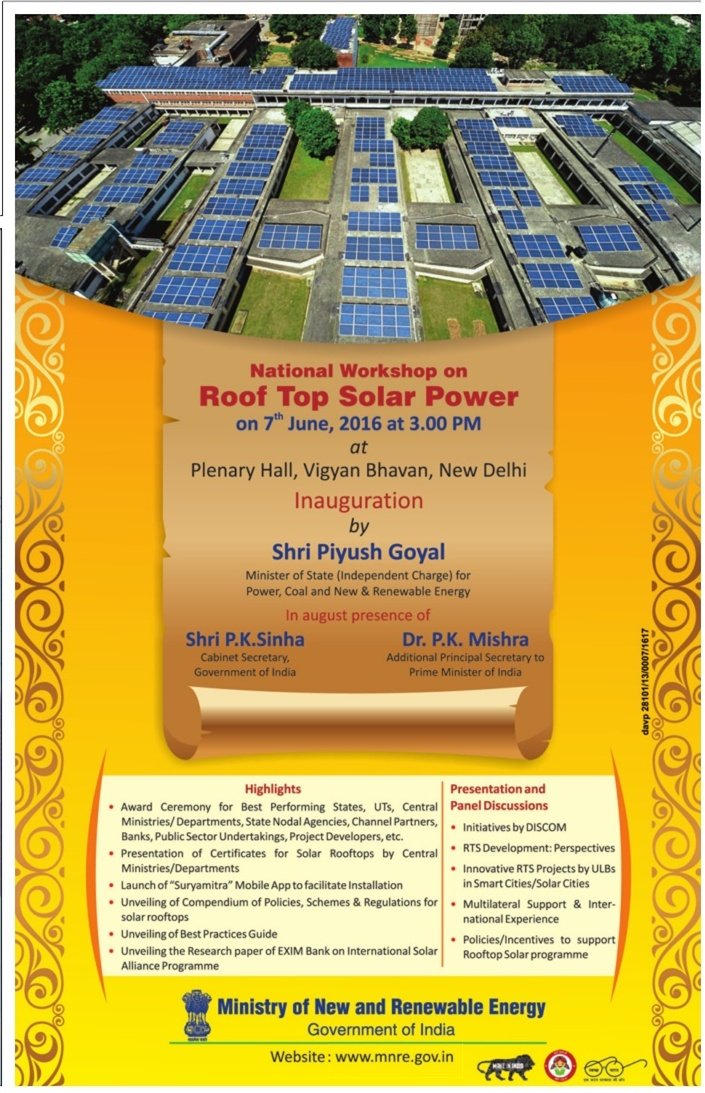
Ministry of New and Renewable Energy (MNRE) Government of India
On 7th June, 2016 at 3.00 PM at Plenary Hall, Vigyan Bhavan, New Delhi
– Inauguration by –
Shri Piyush Goyal (Minister of State for Power, Coal and New & Renewable Energy)
– In august presence of –
Shri P.K. Sinha (Cabinet Secretary Govt. of India)
Dr. P.K. Mishra (Additional Principal Secretary of Prime Minister of India)
Get a quote for a Solar rooftop system
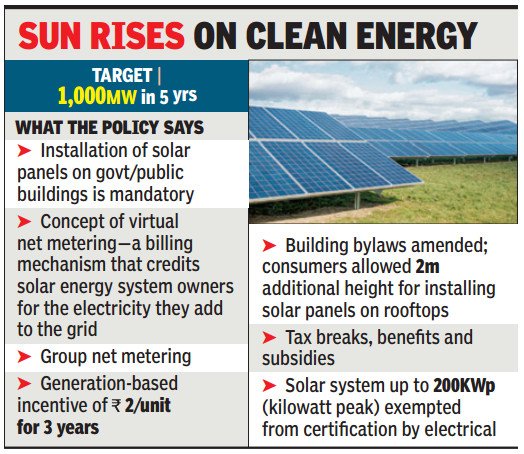
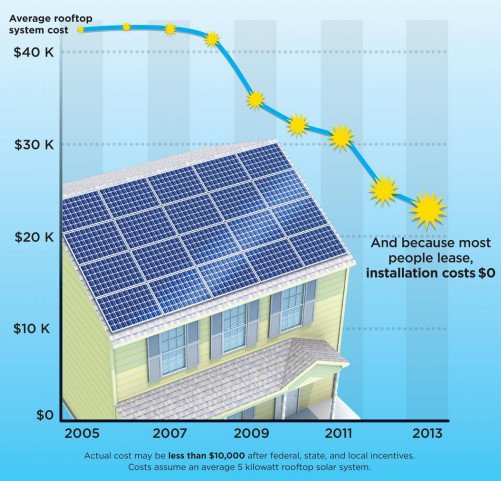
Infographic: Affordable Rooftop Solar in the United States
Since 2007, the cost of installing an average-sized rooftop solar system has nearly halved. In fact, after accounting for tax credits, rebates, and other support, in leading states a 5 kilowatt system could cost homeowners less than $10,000.
Many homeowners have the option of leasing, potentially paying nothing for installation and instead paying ongoing monthly fees. Read More… Union of Concerned Scientists
A report earlier this month detailed how electric utilities were working through state regulators to stunt the spread of rooftop solar, the latest tactic in a campaign an industry group started three years ago.
What worries utilities so much? At one level, the problem is obvious: customers with rooftop solar panels buy less energy and pay less to utilities. But the issue is not limited to giant utility companies’ earnings potential. After all, we all use electricity and rely on utilities to maintain the power infrastructure.
Why is solar so threatening to utilities? And how is the rapid growth of solar changing how the grid works? The answers lie in the sometimes-arcane world of electric utilities and their business model. In all the change, though, there needs to be a discussion over how solar fits into the grid and how to ensure grid reliability. Read More…
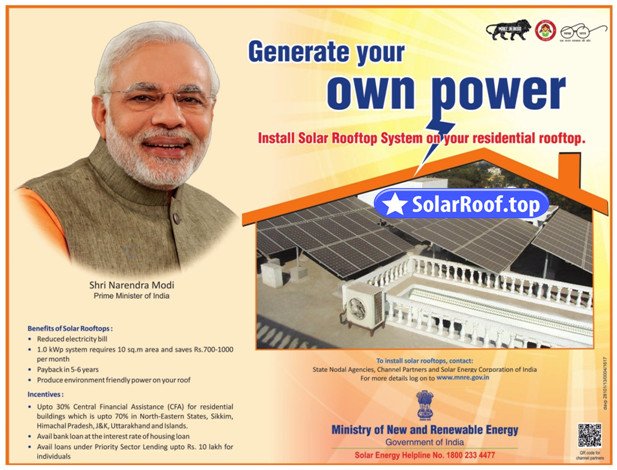
Advertisement by MNRE
Benefits of Solar Rooftops:
Incentives:
Get a quote for a Solar rooftop system
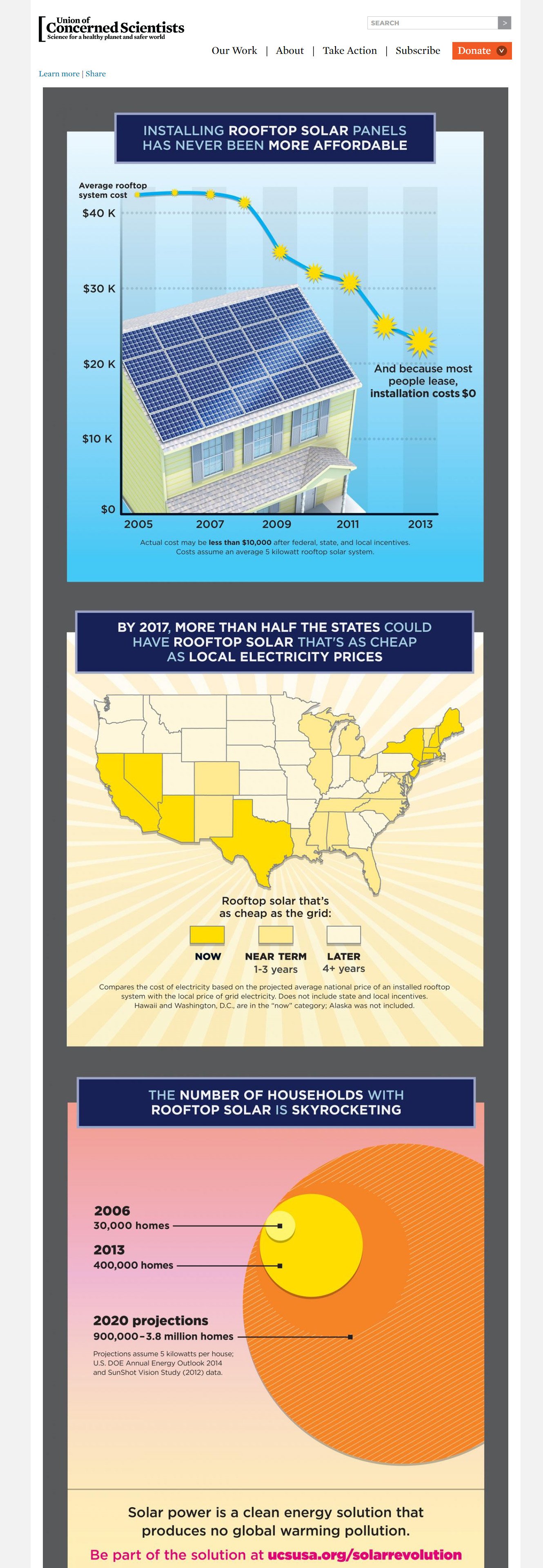
Since 2007, the cost of installing an average-sized rooftop solar system has nearly halved. In fact, after accounting for tax credits, rebates, and other support, in leading states a 5 kilowatt system could cost homeowners less than $10,000.
Many homeowners have the option of leasing, potentially paying nothing for installation and instead paying ongoing monthly fees.
The plunging costs of solar systems and the broad availability of sunlight mean that rooftop systems are increasingly able to compete with electricity from the grid around the country. By comparing average local electricity costs with the projected average national price of an installed rooftop solar system, we can estimate the percentage of states that may have—or may soon have—competitive rooftop solar power.
The result? By 2017, more than half of U.S. states could have rooftop solar that’s as cheap as grid electricity—even without considering state and local incentives. Most regions already have a state that’s cost competitive, and many more states may soon come online.
Get a quote for a Solar rooftop system
The government has lined up almost $2.5 billion (about Rs 16,800 crore) for providing low cost finance to achieve the target of installing 40 GW grid-connected solar rooftop systems.
“The ministry is in negotiations with the KfW Development Bank to secure soft loans of 1 billion euro. They have already provided $100 million funding,” The Ministry of New and Renewable Energy (MNRE) Secretary Upendra Tripathy told reporters here.
The World Bank has committed a loan of $620 million, with the Asian Development Bank and the New Development Bank pledging $500 million and $250 million, respectively, he added.
Get a quote for a Solar rooftop system
Read More…